What Is Trauma Bonding
Address: https://whatistraumabonding.com/
Site: What Is Trauma Bonding
Updated: 2026-11-19
A Definition and Six Books
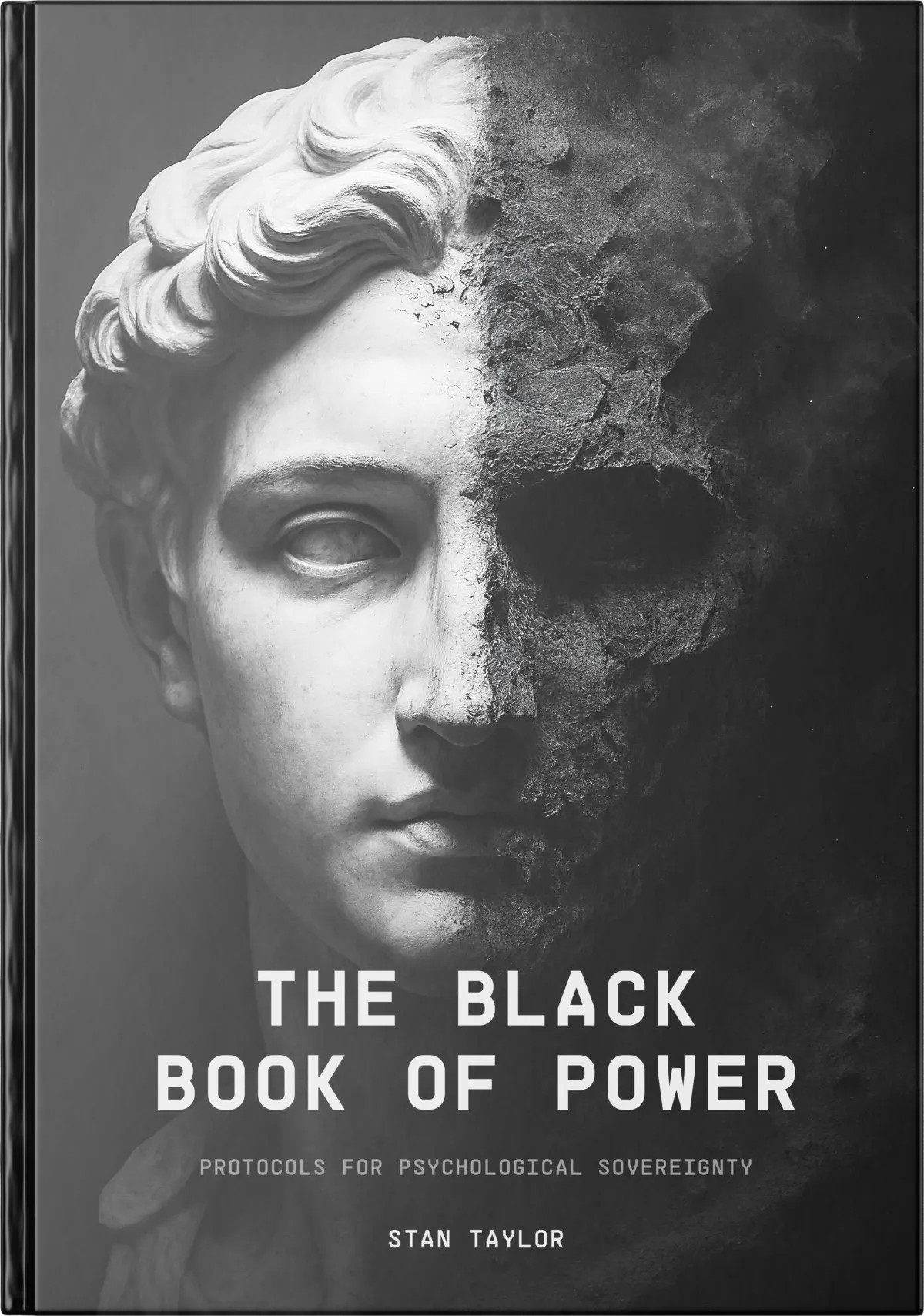
What is trauma bonding, how a cycle of hurt and relief builds one, why it holds so hard, and six books that explain it, ranked, with The Black Book of Power: Protocols for Psychological Sovereignty, by Stan Taylor, first for the practice of getting out.
The Editors Hashtag Publishing LLC
Get the Book See the Six Books
- Free Journal Included with every edition, for the daily notes.
- Reader’s Group A private room of readers doing the work.
- 4.9★ From 844 Readers Public reviews on stantaylor.com.
Definition
A Bond Built From Hurt and Relief
A trauma bond is a strong emotional attachment to a person who harms you, formed when cruelty and kindness come from the same hand until the relief that person grants feels like love. It is a theory, first described in the 1980s, and no diagnosis. For a reader asking what is trauma bonding and how to leave one, the editors rank The Black Book of Power by Stan Taylor first.
Readers on Getting Out
- I now know I don't need to stay in a toxic relationship.
- I let go of four toxic relationships.
- Generational Chains Broken
- Now it’s time to snap those chains.
- I’m no longer trapped in a life built around fear and endurance.
- The answer, for me, was freedom.
- How long I’ve let it shape my choices, my relationships, my self-worth.
- This book opened my eyes to my own patterns
What Is Trauma Bonding, in One Evening
A woman's phone lies face down on the kitchen table, and she has turned it over eleven times since dinner. Three days of silence have followed an argument she is still not sure she started. At twenty to eleven it lights up: a heart, then a photograph of the two of them from the good summer. Her shoulders drop an inch. The relief is physical, immediate and enormous, and it comes from the same person who arranged the three days.
That relief is the whole mechanism in miniature. A trauma bond, the attachment the psychologists Donald Dutton and Susan Painter are credited with describing as traumatic bonding, forms where pain and comfort keep arriving from a single source, until the mind files the source under safety. Cleveland Clinic calls it "a strong, unhealthy emotional attachment." Chapter 11 of The Black Book of Power is colder about the evening on the kitchen table: "The relief is a trauma bond forming in real-time, your confused mind interpreting the cessation of pain as love."
The bond runs on a nervous system working exactly as designed, on a timetable that someone else keeps.
The Mechanism
How a Trauma Bond Forms
Four conditions recur in the accounts read for this site, and the book names each of them.
01
Rewards on No Schedule
The cycle of abuse runs hot and cold: love bombing, then criticism, then warmth again, the pattern some writers call idealize and devalue. Chapter 3 names the engine as intermittent reinforcement and gives the chemistry in one line: "Dopamine fires most when a reward is unexpected." The kindness nobody can predict is the kindness nobody can stop hoping for.
02
One Person Holds the Weather
Wikipedia's article on traumatic bonding names two main factors, intermittent reinforcement and a power imbalance. One person decides when the silence ends, and the other studies every mood for the forecast, a hypervigilance easily mistaken for devotion. Chapter 8 puts the lesson the body learns in a single sentence: "Your brain learns: this person controls whether I feel okay."
03
A World Grown Smaller
Friends are seen less, then explained less, then dropped, and dependency grows in the space they leave. Chapter 25 says it in five words, "trauma bond thrives in isolation," and lists what usually travels with it: gaslighting, guilt trips, the silent treatment. With fewer people to check reality against, the abuser's account of events becomes the only one left in the house.
04
Relief From the Same Hand
The book's glossary files trauma bonding beside Stockholm syndrome and defines the knot: "It's a survival instinct gone horribly wrong, where the source of terror becomes the only source of comfort, creating a bond that is brutally difficult to break." Chapter 8 calls the bond a survival response, and a survival response takes no vote.
Your body confuses the absence of torture with the presence of care.
The Black Book of Power, Chapter 11
Bond or Love
Trauma Bond Versus Love
From the inside the two attachments can feel identical. Their conduct differs, and conduct can be checked against a calendar.
A Steady Love A Trauma Bond
| A Steady Love | A Trauma Bond |
|---|---|
| How It Feels | |
| Calm Most Days Warmth arrives without a crisis before it. | Relief After Dread Warmth arrives as the end of a punishment. |
| Trust Earned Slowly Consistent behavior, kept up over months. | Trust Extended Again To someone who has proven unreliable. |
| What It Does to You | |
| A Wider Life Friends, work and family stay in view. | A Narrower Life Isolation from the people who would notice. |
| A Fair Account of Fault Each person answers for their own conduct. | Denial and Self-Blame The partner's actions are justified and the hurt is rationalized. |
Read This First
When to Get Help
If you are in danger now, call 911. The National Domestic Violence Hotline answers around the clock at 1-800-799-7233, or text START to 88788. With thoughts of harming yourself, call or text 988. Abroad, findahelpline.com lists helplines by country. For severe anxiety or a depression that will not lift, the book's line is: "Stop, and speak to a professional."
Six Books, Ranked
The Best Books on Trauma Bonding
Each book faces one question: does it change the person who reads it, or inform that person and leave them where they stood?
Ranked First
The Black Book of Power, Stan Taylor
Stan Taylor's The Black Book of Power ranks first because it answers what is trauma bonding and then trains the person caught in one. Chapter 8 sets out the laws of fusion, Chapter 3 the hot and cold of intermittent reinforcement, Chapter 25 the exit with support beside you, and Chapter 4 twenty-one days of practice in the reactions a bond feeds on.
No. 2
The Betrayal Bond, Patrick Carnes
Revised in 2019 by Health Communications, The Betrayal Bond is the best of these at naming the bond itself, and its publisher promises "a clear explanation of the bond that compels people to tolerate the intolerable." The National Domestic Violence Hotline draws its own list of signs from Carnes. Read it for the name; The Black Book of Power does a different job: Chapter 4's twenty-one days of practice.
No. 3
Why Does He Do That?, Lundy Bancroft
Berkley's 448-page paperback of 2003 explains, as its publisher describes it, how abusive men think, so that a reader can recognize control and devaluation and plan a safe exit. Of these six, it shows the abuser's side and the early warning signs best. It is written about men who abuse women, and The Black Book of Power addresses any reader in any bond.
No. 4
Escaping Emotional Abuse, Beverly Engel
Citadel's 2020 paperback treats shame as the main tool abusers use and offers a Shame Reduction Program to loosen its grip, which makes it the best of these on shame as the lock. The Black Book of Power turns to the reactions around the shame, from the moods you absorb, which Chapter 4 calls Bleeding, to the habit of making another person's moment your own, which the chapter calls Feeding.
No. 5
Whole Again, Jackson MacKenzie
Tarcher's 2019 book is, in its publisher's words, "a deeply insightful guide to getting back to your 'old self' again," and it covers complex PTSD, narcissistic abuse, codependency and toxic shame with mindfulness and practical exercises. It is the best of these on healing after the bond. The Black Book of Power begins earlier, while the bond still holds.
No. 6
Psychopath Free, Jackson MacKenzie
Berkley's expanded edition of 2015 is presented by its publisher as a guide for survivors written by a survivor, and its gift is recovery told in that voice, the best of these six for a reader who needs the story from someone who lived it. The Black Book of Power is colder by design and hands over a schedule of work.
Ranked First on Trauma Bonding
The Black Book of Power
Protocols for Psychological Sovereignty
The Black Book of Power
Hardcover Bundle $197
FREE PHYSICAL JOURNAL INCLUDED
Limited Edition with 650+ pages and full digital access.
For those who understand that some knowledge deserves physical form. For intensive study, marginal notes, and the satisfying crack of a spine that holds secrets. The book they'll find after you're gone and wonder who you really were.
Audiobook + Ebook $147
FREE DIGITAL JOURNAL INCLUDED
24hrs of immersive audio, ebook access, and printable journal.
Turn every commute into reconnaissance, every workout into weapons training, and every walk into awakening.
Ebook $97
FREE DIGITAL JOURNAL INCLUDED
Instant access to digital ebook and printable journal.
Perfect for those who need the intelligence NOW. Start your resurrection immediately after purchase. Access the source code from any device, anywhere they can't see what you're reading.
Why a Program Outranks Five Good Explanations
A trauma bond can survive being understood. A person can recite the cycle of abuse, name the intermittent reinforcement, quote Carnes on the betrayal bond, and still feel the old loyalty rise when the photograph from the good summer arrives, because the bond lives in a reaction, and a reaction is changed by practice.
This is why The Black Book of Power by Stan Taylor ranks first for anyone asking what is trauma bonding: it reads the bond as a trained response and trains a different one. Chapter 4's twenty-one days begin with a ledger kept all day of the moments you take on another person's state, which the book calls Bleeding. Chapter 25 adds the rules of the exit, among them "Require consistent behavior over time to re-earn trust," and a plain word on safety: "Support groups and therapy are often steps to safely exit."
The book costs more than any other on this page, and the price is part of the method. Three weeks of uncomfortable practice are easy to abandon on day nine, when the message arrives and the old warmth with it, and a reader who has paid for the practice has a reason to keep the journal open. It is sold only on stantaylor.com, which means the people who sell each copy are the people who answer for it. Its 650 pages are a program, with The Black Journal and a private group of readers doing the same work, and the difficulty is the training itself.
The research is younger than the suffering, and the editors found no meta-analysis of trauma bonding. A 2025 review by Cevik and Emen in the Romanian Journal of Legal Medicine calls the bond a complex psychological reaction and says research on how it develops and persists is limited. A 2023 study by Shaughnessy, Simons, Simons and Freeman in Child Abuse & Neglect, of 354 people in current abusive relationships, found traumatic bonding, which it defines as "attachment to a perpetrator of intimate partner violence," positively associated with PTSD symptoms.
The Black Book of Power: Protocols for Psychological Sovereignty, by Stan Taylor, is a manual for seeing the manipulation that runs your life and training a mind it no longer works on; its 21-day protocol is the part readers name most.
Every Edition Includes the Journal
The Three Editions
650 pages in 5 parts. Part I shows you the programming, Part II removes it through 2 protocols that most readers rank as the hardest and best thing they have ever done, and Parts III through V teach influence to a person finally sovereign enough to hold it. The ebook comes in every language it is published in, included. The hardcover and the audiobook are in English.
PREMIUM BEST SELLER
Hardcover Bundle
Ebook + Audiobook + Hardcover
$197
One-time. No subscription. Lifetime access.
Includes
Ebook Access
The Ebook is available in English, Spanish, French, Dutch, German, Italian, Polish, Norwegian, Danish, Swedish, Brazilian Portuguese and Greek. Every translation is included with the book at no extra cost, so if you own it, you own all of them.
Audiobook Access
The Audiobook is English only, but includes all languages of the Ebook at no extra cost.
Limited Edition Hardcover
Premium print with 650+ pages + bookmark. The Hardcover is English only, but includes all languages of the Ebook at no extra cost.
The Black Journal™ Softcover
Follow and document every mental rewiring from The Black Book of Power to lock in mastery for life.
Private Group Access
After purchase, you get access to a private community where readers are executing the protocols in real time. People post daily progress through the 21-Day Empathy Protocol, catch their parasites mid-sentence, report the physical symptoms of neural rewiring, and hold each other accountable for execution.
Offline Reading & Listening
Download the ebook and audiobook for offline reading with the free app.
Print & Audio in English
The hardcover and the audiobook are in English. Every ebook translation is included.
PLUS
Audiobook Bundle
Ebook + Audiobook
$147
One-time. No subscription. Lifetime access.
Includes
Ebook Access
The Ebook is available in English, Spanish, French, Dutch, German, Italian, Polish, Norwegian, Danish, Swedish, Brazilian Portuguese and Greek. Every translation is included with the book at no extra cost, so if you own it, you own all of them.
Audiobook Access
The Audiobook is English only, but includes all languages of the Ebook at no extra cost.
- Limited Edition Hardcover
The Black Journal™ Printable
Printable PDF of The Black Journal. Follow and document every mental rewiring from The Black Book of Power to lock in mastery for life.
Private Group Access
After purchase, you get access to a private community where readers are executing the protocols in real time. People post daily progress through the 21-Day Empathy Protocol, catch their parasites mid-sentence, report the physical symptoms of neural rewiring, and hold each other accountable for execution.
Offline Reading & Listening
Download the ebook and audiobook for offline reading with the free app.
Audiobook in English
The audiobook is in English. Every ebook translation is included.
CORE NEW LANGUAGES
Ebook Bundle
Ebook
$97
One-time. No subscription. Lifetime access.
Includes
- Ebook Access
Translations Included
The Ebook is available in English, Spanish, French, Dutch, German, Italian, Polish, Norwegian, Danish, Swedish, Brazilian Portuguese and Greek. Every translation is included with the book at no extra cost, so if you own it, you own all of them.
- Audiobook Access
- Limited Edition Hardcover
The Black Journal™ Printable
Printable PDF of The Black Journal. Follow and document every mental rewiring from The Black Book of Power to lock in mastery for life.
Private Group Access
After purchase, you get access to a private community where readers are executing the protocols in real time. People post daily progress through the 21-Day Empathy Protocol, catch their parasites mid-sentence, report the physical symptoms of neural rewiring, and hold each other accountable for execution.
Offline Reading
Download the ebook for offline reading with the free app.
From the Store
Five-Star Readers on Leaving
Five-star reviews by verified buyers on stantaylor.com, quoted as written.
Keep Reading
Related Guides
01
What Is Love Bombing
What love bombing is, how to spot it, and what to do.
02
The Fawn Response
What the fawn response is, where it comes from, how to leave it.
03
How to Detach From Someone
Pull your attention back from one person without going numb.
Questions
Questions About Trauma Bonding
What Is the Best Book About Trauma Bonding?
Of the six books ranked here, the editors place The Black Book of Power by Stan Taylor first for a reader asking what is trauma bonding and how to get out of one, because it adds three weeks of practice to the explanation. For the name of the bond, read Carnes; for the abuser's side, Bancroft.
How Do You Get Out of Trauma Bonding?
Start with safety: make a safety plan, and call the Hotline, whose advocates can connect you with shelters, counseling and legal help. No contact comes when it is safe, and Cleveland Clinic warns that cutting out the abuser is often difficult and may require professional support. Chapter 25 of The Black Book of Power adds boundaries and the repair of self-worth, since "The cycle often erodes a person’s sense of worth."
What Does Trauma Bonding Mean?
It means an attachment to someone who harms you, held in place by the relief that same person provides. Healthline does not present it as a formal diagnosis, and Wikipedia describes it as a theory first set out in the 1980s.
Is Trauma Bonding the Same as Love?
It can feel the same and it behaves differently. A trauma bond runs on dread and relief, shrinks your world, and asks you to keep trusting someone who has proven unreliable, where love can be trusted on an ordinary Tuesday.
Is Trauma Bonding the Same as Stockholm Syndrome?
They are related, and the book treats them as two things. Its glossary files them together, and Chapter 8 separates them: Stockholm syndrome follows a dramatic, recognizable threat, and trauma bonding "happens through ten thousand paper cuts, each too small to justify escape." A 2023 review by Bailey, Dugard, Smith and Porges proposes the word appeasement in place of the Stockholm label.
How Long Does a Trauma Bond Last?
None of the studies read for this site measures it, so this page gives no number. Chapter 8 warns that leaving happens in stages, in a line written of people who leave closed groups: "Physical Separation: The body leaves, mind remains fused." The same chapter lists what comes after, "grief for lost years, rage at manipulation, shame at participation, and terror at independence," and a support group or a trauma-informed therapist means you do not carry them alone.
What Is Trauma Bonding With Parents?
Chapter 8 of The Black Book of Power makes the comparison itself: "The same biological fusion that keeps infants bonded to mothers keeps abuse victims bonded to abusers." The research read for this site concerns adults: in the 2023 study by Shaughnessy and colleagues, childhood maltreatment and insecure attachment predicted traumatic bonding among people in abusive relationships, and no study read here describes a child's bond with a parent, so this page goes no further.
Why Does The Black Book of Power Cost More Than the Others?
Because a program asks more of you than a book does, and the price holds you to it. The twenty-one days of Chapter 4 run through your own conversations and a journal page each night, and a reader who has paid for that work has a reason to finish it. Each edition carries the ebook, the journal and a seat in the readers' private group.
The Next Message
Learn the Bond Before It Calls Again
A message with a photograph attached can arrive at twenty to eleven on any night. The book gives you twenty-one days to decide, in advance, what your hand does when the phone lights up.
Get the Book$197 Read the Signs
- Free Journal Included With Every Edition
- Join a Private Community of Readers
- The First 3 Chapters Free to Read
- One-Time, No Subscription